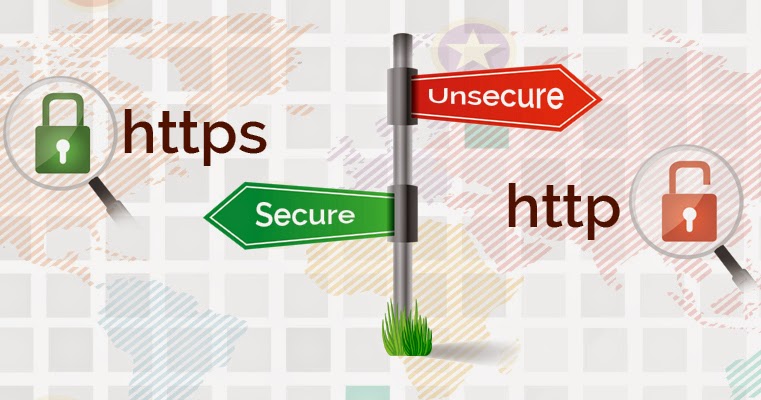
Whenever you access a website, it begin with “
HTTP” or “
HTTPS“. It’s just an “
S” the most, however it makes a biggest difference and it is necessary to know the specifications to find out if the navigation, in particular webpage is safe or not.
HTTP (Hyper Text Transfer Protocol) is a protocol, i.e. a certain rule that lets your computer to exchange data with a server that hosts a website. This means once connected using this protocol, machines can send and receive any text content – the codes that result in the web page accessed via the web browser.
The issue with HTTP is that in Wi-Fi networks or other favorable connections to phishing (wire fraud) and hackers, malicious people can cross the road and intercept data transmitted relatively ease. Hence, the HTTP connection is considered as insecure.
HTTPS (Hyper Text Transfer Protocol Secure), which inserts a layer of protection in data transmission between your computer system and the web server. On sites with HTTPS address, communication is encrypted, tremendously increasing the data security. It is as if client and web server talked a language that only the two understood, making it difficult to intercept the information.